
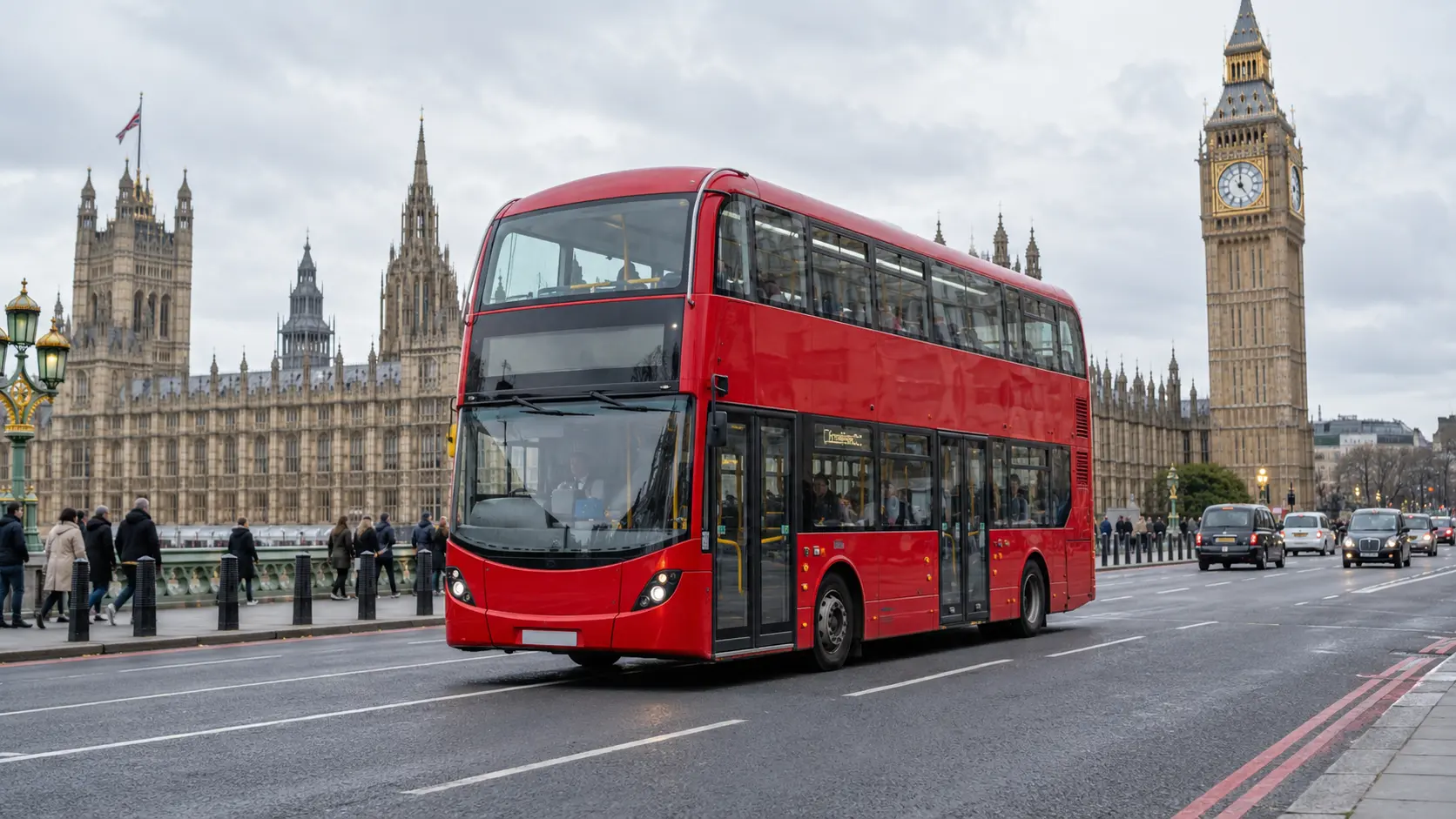
Why Are London Buses Red? The colour was not selected in one grand civic ceremony. It emerged from competition between private operators, became dominant through the London General Omnibus Company, and was later reinforced when London’s transport network was brought under unified control.
Red made buses easy to recognise in a crowded market. Once one operator became overwhelmingly important, its brand colour spread across the city. Decades of repetition then transformed a commercial choice into part of London’s visual identity.
London’s Early Buses Wore Many Colours
In the nineteenth and early twentieth centuries, London bus services were run by competing companies. Operators used different liveries to distinguish their vehicles and routes, so the streets did not begin with one standard red fleet.
Colour worked as instant advertising. Many passengers could recognise a familiar livery more easily than read a company name or route board at a distance. In an expanding and sometimes chaotic market, a strong visual identity mattered.
The London General Omnibus Company, usually called the LGOC or simply the General, became the largest operator. Its decisions therefore had an outsized effect on what Londoners saw.
The General Adopted Red
According to London Museum, the LGOC bought the rival Vanguard company in 1908 and switched to Vanguard’s red colour scheme. The expanding General used red across its fleet, helping passengers identify its services among competitors.
This was practical branding rather than an attempt to create a national symbol. Red was conspicuous, memorable, and increasingly associated with the city’s dominant bus operator.
As the LGOC absorbed rivals and strengthened its position, the colour became more common. London’s red-bus tradition grew through corporate consolidation long before it became souvenir-shop shorthand.
Unification Made Red the Standard
In 1933, the London Passenger Transport Board was created to bring most of the capital’s public transport under one organisation. The businesses that formed the network included the LGOC and its familiar red central-area buses.
Unified management strengthened the consistency of vehicle design, branding, maps, signs, and publicity. Central London buses remained red, while many country services operated by London Transport were green.
The distinction shows that the colour was part of an organised identity rather than a rule that every bus connected with London had to be red.
The Routemaster Sealed the Image
The Routemaster entered service in the 1950s and became one of the world’s most recognisable bus designs. Its curved body, double-deck layout, open rear platform on classic versions, and bright red livery created an image endlessly repeated in films, postcards, toys, and advertising.
Not every red London bus was a Routemaster, and not every Routemaster remained in ordinary service forever. Yet the combination became so powerful that “London bus” still evokes that silhouette for many people.
By then, red no longer belonged merely to an operator. It belonged to the popular idea of London alongside black cabs, Underground roundels, and telephone boxes.
Is There an Official Shade of Red?
Transport organisations use specified colours to keep branding consistent, although exact paint formulas and materials have changed over time. Historic buses can vary because of period standards, paint ageing, restoration choices, and photography.
Modern London bus contracts require vehicles used on regular services to carry a predominantly red livery, preserving the network-wide identity even though private companies operate routes under contract to Transport for London.
The shade matters less to most passengers than the collective effect: thousands of similarly coloured vehicles make the network recognisable at a glance.
Why Red Works So Well
Red is highly visible in many urban settings and contrasts with stone, brick, grey roads, and often grey skies. It helps a large moving vehicle stand out, although modern safety depends on lights, markings, driving standards, and road design rather than colour alone.
Its greatest advantage is now familiarity. Londoners and visitors know what the red vehicle represents. The colour reduces the mental effort needed to identify a bus and links different operators into one public network.
Changing it would sacrifice more than paint. It would discard more than a century of accumulated recognition for the exciting benefit of confusing absolutely everyone.
Today’s fleet includes many vehicle types, including zero-emission buses, but the shared colour keeps rapid technological change visually tied to the historic network.
The Bottom Line
London buses are red because the dominant London General Omnibus Company adopted the colour in 1908, and later transport unification preserved it for central services. The Routemaster and decades of consistent use turned practical operator branding into an international symbol of the city.
FAQ
Were London buses always red?
No. Early private operators used various colours. Red became dominant as the London General Omnibus Company expanded and was later standardised through unified transport control.
Why were some London buses green?
London Transport historically used green for many country and Green Line services outside the central red-bus area.
Are all London buses operated by TfL?
Transport for London plans and manages the network, while private bus companies operate routes under contract. The shared red livery presents them as one system.
Sources
London buses: Red, iconic, double-decked :: https://www.londonmuseum.org.uk/collections/london-stories/london-buses-red-iconic-double-decked/
What to see — London Bus Museum :: https://www.londonbusmuseum.com/what-to-see/
What we do — Transport for London :: https://tfl.gov.uk/corporate/about-tfl/what-we-do