
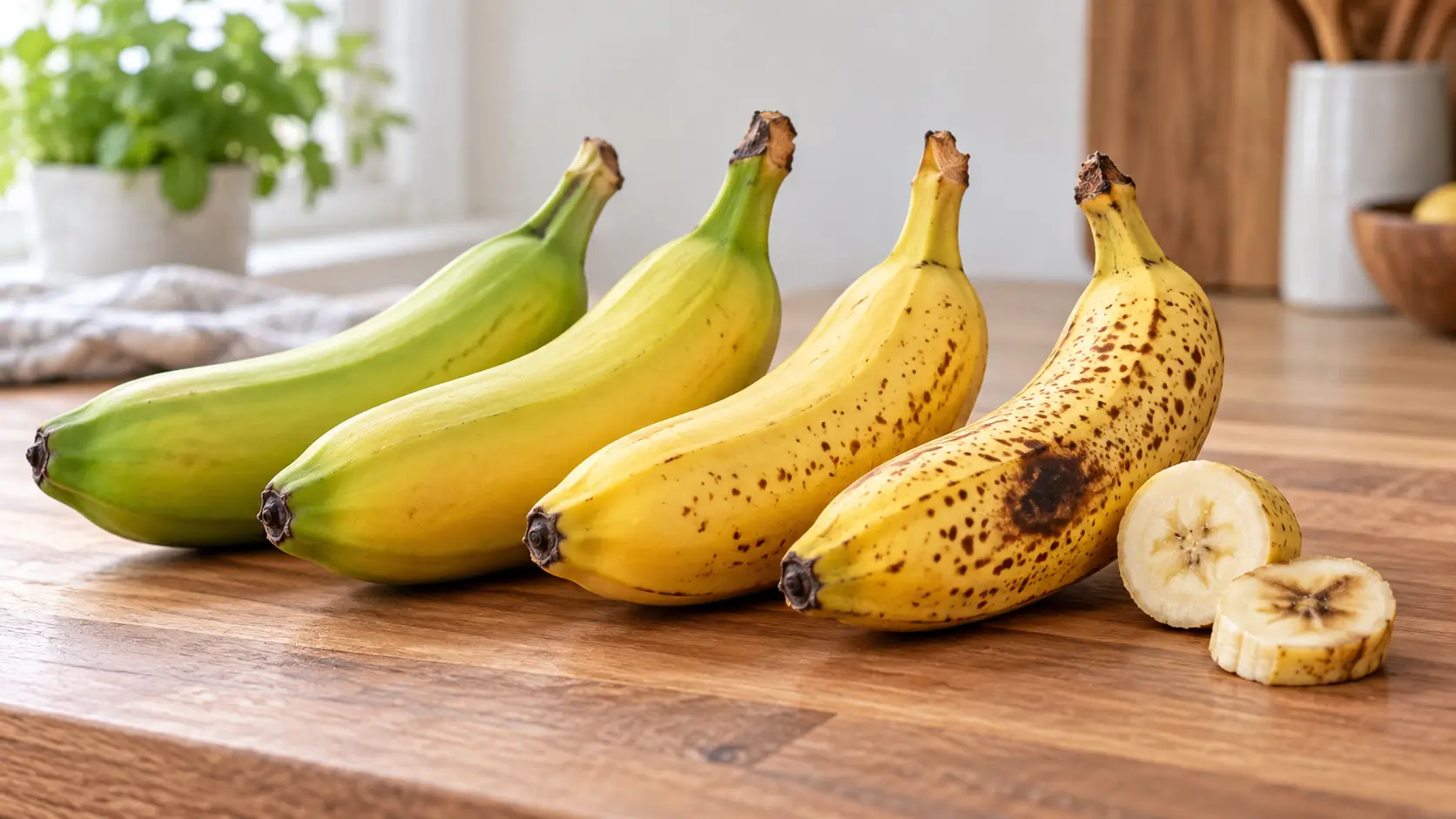
Why Do Bananas Turn Brown? The colour change comes from two connected processes. Normal ripening alters pigments and softens the fruit, while damaged or ageing cells allow an enzyme called polyphenol oxidase to react with plant compounds and oxygen.
The products of those reactions combine into brown pigments. That is why a banana develops freckles as it ripens, dark patches where it has been bruised, and rapid browning when the flesh is cut and exposed to air.
Ripening Changes the Banana First
Bananas are climacteric fruit, meaning they continue ripening after harvest and produce a burst of the plant hormone ethylene. Ethylene coordinates changes that make the fruit sweeter, softer, and more aromatic.
Green chlorophyll in the peel breaks down, revealing yellow pigments beneath it. Starches in the flesh are converted into sugars, acids change, cell walls soften, and hundreds of aroma compounds develop.
As ripening continues, cell membranes become less robust. Compartments that once kept enzymes separate from their chemical substrates begin to break down, making browning reactions easier.
The Browning Enzyme Needs Oxygen
Polyphenol oxidase, usually shortened to PPO, is found in banana tissue. Inside intact cells, the enzyme and phenolic compounds are largely kept apart in different structures.
Cutting, crushing, or bruising breaks those barriers. Oxygen from the air enters the tissue, and PPO helps oxidise phenolic compounds into quinones. These reactive molecules then combine through further reactions to form dark pigments often described broadly as melanins.
The same family of reactions browns sliced apples, pears, potatoes, and avocados. Bananas simply provide an especially theatrical demonstration.
Why Bruises Turn Dark So Quickly
A bruise damages cells beneath the peel without necessarily breaking the outer skin. Enzymes, phenolic compounds, and oxygen suddenly gain access to one another in the injured area.
The impact also disrupts the tissue’s structure, so the patch becomes soft as well as brown. A banana may look fine immediately after being dropped and develop a dark thumb-shaped mark hours later as the chemistry progresses.
Gentle handling therefore matters. The decorative banana hammock seen in some kitchens is not entirely frivolous; preventing pressure points can reduce bruising.
Are Brown Bananas Rotten?
Brown spots normally indicate advanced ripeness or bruising, not dangerous spoilage. The flesh becomes softer and sweeter as more starch is converted to sugar, which is why heavily spotted bananas work well in baking and smoothies.
Spoilage has different signs, including mould, leaking liquid, a fermented or unpleasant smell, and flesh that is slimy rather than simply soft. Colour alone is not a complete safety test, but an ordinary spotted peel is not evidence that the banana has crossed into villainy.
Why the Fridge Makes the Peel Look Worse
Bananas are tropical fruit and their peel is sensitive to chilling. Refrigeration can damage peel cells and encourage darkening, making the outside turn brown or black quickly.
If the banana was already ripe when chilled, the flesh inside may remain acceptable for longer because low temperature slows many ripening and microbial processes. The result can be an alarming peel around perfectly usable fruit.
Very green bananas may not ripen properly after prolonged chilling, so room temperature is better until they reach the stage you want.
Can You Slow Banana Browning?
Handle the fruit gently and keep it away from unnecessary heat. Once ripe, refrigeration can slow further softening even though the peel darkens. Freezing peeled pieces works well for later baking or blending, although thawed texture will be soft.
For cut banana, reducing contact with oxygen helps. An airtight container slows browning, while acidic juices such as lemon or orange lower the pH and can reduce enzyme activity. The flavour trade-off is yours to negotiate.
Ethylene from other ripening fruits can also speed changes, so moving bananas away from fruit you want to keep firm may help. Conversely, placing an unripe avocado near bananas can use that ethylene to your advantage.
The spreading freckles of a ripe banana also change its flavour and aroma. They accompany ongoing conversion of starch into sugar, so a spotted fruit often tastes noticeably sweeter than a firm yellow one. Browning and sweetness happen alongside each other, although the brown pigment itself is not what creates the sugar.
The Bottom Line
Bananas turn brown as ripening weakens cell structures and damage brings polyphenol oxidase, phenolic compounds, and oxygen together. The enzyme-driven reactions produce dark pigments. Bruising speeds the process locally, while refrigeration can darken the peel even when the flesh remains usable.
FAQ
Can you eat a banana with a brown peel?
Usually, yes. Brown spotting is a normal sign of ripeness. Check the flesh and smell for actual spoilage rather than rejecting it on peel colour alone.
Why do cut bananas brown faster?
Cutting destroys cell compartments and exposes a large surface to oxygen, allowing the browning enzyme and its substrates to react rapidly.
Does lemon juice stop banana browning?
It slows it by lowering the pH and limiting enzyme activity. It does not preserve the original colour indefinitely.
Sources
Molecular cloning and characterisation of banana fruit polyphenol oxidase :: https://pubmed.ncbi.nlm.nih.gov/11678279/
Comparative study of the banana pulp browning process during fruit ripening :: https://pmc.ncbi.nlm.nih.gov/articles/PMC5742564/
Low oxygen concentration alleviates banana peel browning :: https://academic.oup.com/ijfst/article/59/5/3350/7807997