
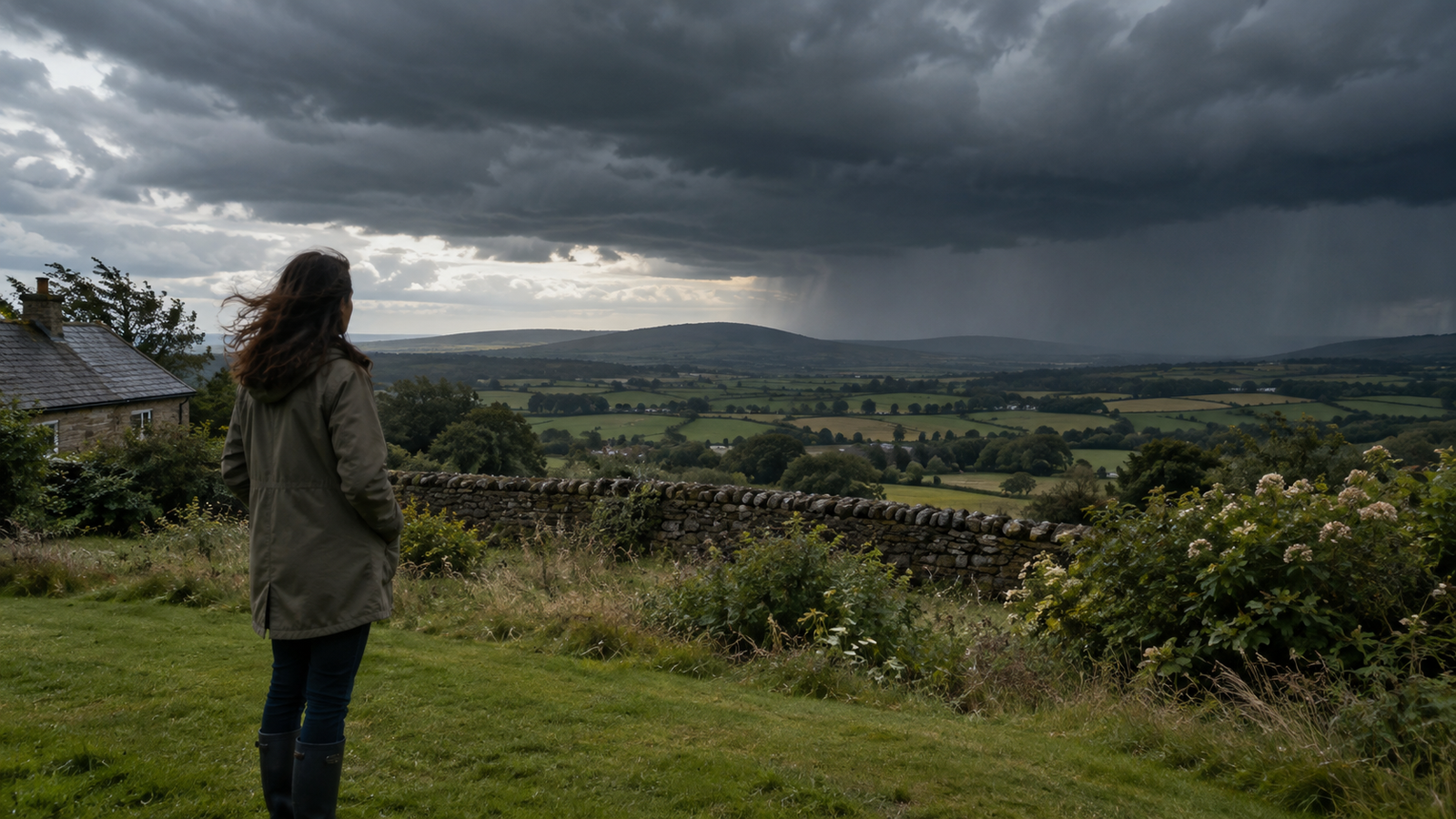
Some people appear to possess a deeply unimpressive superpower.
They walk outside on an otherwise dry afternoon, sniff the air, and confidently announce:
“It’s going to rain.”
Ten minutes later, it rains.
This can feel like folklore, especially if your weather app was considerably less certain.
But there really are smells associated with approaching and falling rain, and under the right conditions your nose can detect them before the first drops reach you.
The Famous Smell of Rain Is Called Petrichor
That wonderfully earthy smell produced when rain hits dry ground has a name: petrichor.
The term was coined by Australian researchers Isabel Joy Bear and Richard Thomas in the 1960s.
It comes from Greek words relating to stone and the mythical fluid said to flow through the veins of the gods.
Which is an unexpectedly dramatic name for “the pavement smells nice now”.
Petrichor is not actually the smell of water itself.
Instead, it comes from compounds released from soil, rocks, plants, and microorganisms.
One of the Most Important Smells Comes From Bacteria
Soil contains microorganisms including bacteria from the genus Streptomyces.
These produce a compound called geosmin.
Geosmin has a powerful earthy smell — the sort of aroma you might notice while digging in damp garden soil.
Humans are remarkably sensitive to it.
When rain hits porous ground, tiny bubbles can form inside the raindrop where it contacts the surface.
Those bubbles rise and burst, throwing microscopic aerosols into the surrounding air.
Those aerosols can carry geosmin and other compounds straight towards your nose.
Research using high-speed cameras has demonstrated this surprisingly efficient aerosol-producing mechanism.
So How Can You Smell Rain Before It Arrives?
Technically, the strongest petrichor smell is usually produced when raindrops actually hit the ground.
But weather does not arrive everywhere simultaneously.
Wind can transport airborne compounds from places where rain has already started towards areas that are still dry.
Humidity also tends to rise as rain approaches.
According to the Met Office, increased humidity before rainfall can encourage moisture to enter pores within rocks and soil, helping release some trapped oils into the atmosphere.
In other words, the atmosphere around you is changing before the rain arrives.
Your nose can sometimes notice.
Thunderstorms Can Bring Another Smell
There is another scent people associate with approaching storms: ozone.
Ozone is a molecule made from three oxygen atoms.
It has a distinctive sharp, clean smell that some people describe as vaguely metallic or similar to chlorine.
Electrical activity associated with thunderstorms can contribute to atmospheric chemistry that produces ozone, while powerful downdraughts can transport ozone-rich air towards ground level.
That does not mean every pre-rain smell is ozone.
Ordinary rainstorms and wet ground produce a complicated mixture of scents.
But during thunderstorms, ozone can contribute to that unmistakable feeling that there is something different in the air.
Why Does Rain Smell Stronger After Dry Weather?
A long dry spell allows compounds to accumulate.
Plant-derived oils collect on surfaces. Soil microorganisms go through their own cycles. Dust and organic material build up.
Then rain arrives and abruptly releases some of those compounds into the air.
The first shower after days or weeks of dry weather can therefore smell dramatically stronger than yet another rainy Tuesday in an already soggy week.
Light Rain Can Be Surprisingly Good at Releasing the Smell
You might assume that heavier rain produces more petrichor.
Not necessarily.
Experiments examining the way droplets interact with porous surfaces found that light and moderate rainfall can generate aerosols particularly effectively.
Very heavy rain can overwhelm the delicate bubble-forming mechanism instead.
So that glorious smell after a gentle summer shower is not just romantic imagination.
The physics actually helps.
Why Does the Smell Feel So Distinctive?
Smell has a particularly close relationship with memory and emotion.
A familiar scent can produce an extremely vivid recollection almost instantly.
Petrichor may remind you of childhood summers, wet gardens, hot pavements, holidays, thunderstorms, or standing under a doorway wondering why you did not bring a coat.
The chemistry produces the smell.
Your brain supplies everything else.
The Bottom Line
Yes, you really can sometimes smell rain before it starts.
The classic smell of rain, petrichor, comes from compounds associated with soil, plants, and microorganisms. Raindrops are particularly good at launching those compounds into the air, but increasing humidity and winds from nearby rainfall can bring them towards you before your own patch of ground gets wet.
Thunderstorms may add ozone to the mixture too.
So when someone sniffs the air and confidently announces that rain is coming, they may not be indulging in weather folklore.
Their nose may genuinely have beaten the forecast.
FAQ
What is petrichor?
Petrichor is the distinctive earthy smell associated with rain hitting dry ground.
What causes the smell of rain?
It comes from several sources, including plant oils and geosmin produced by soil-dwelling microorganisms.
Can you really smell rain before it arrives?
Sometimes. Increasing humidity and air moving ahead of rainfall can carry relevant compounds towards you before rain reaches your exact location.
Why does rain smell stronger after a dry spell?
Compounds can accumulate on dry surfaces between periods of rainfall, producing a more noticeable burst of scent when rain finally arrives.
Sources
Rain — Met Office :: Met Office
Ask Smithsonian: Why Does Rain Have A Distinctive Smell? — Smithsonian Magazine :: Smithsonian Magazine
High-Speed Video Shows When The Smell of Rain Begins — Smithsonian Magazine :: Smithsonian Magazine